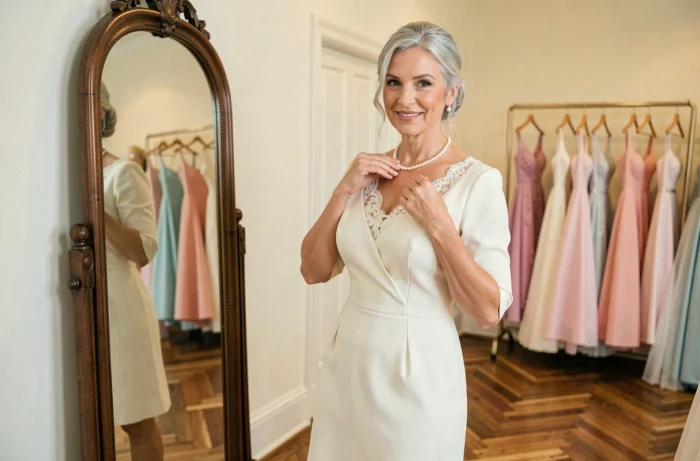
The choice of a wedding outfit after 60 is based on specific criteria: the material, the cut, the color. The silhouette has evolved, the skin reacts differently to fabrics, and ceremony days are long. It’s best to choose each piece with full awareness.
Fluid and breathable materials: the true selection filter for a ceremony outfit
Before thinking about color or style, start with the fabric. It determines whether you will be comfortable at 3 PM under the sun as well as at 11 PM on the dance floor.
Rigid lace and fabrics overloaded with embroidery are increasingly discouraged by stylists specializing in bridal fashion. Fluid and lightweight materials better enhance a mature silhouette. Crepe, stretch satin, and chiffon fall naturally along the body without clinging or compressing.
Why prioritize these fabrics? A good quality crepe hardly wrinkles, hugs the shapes without marking them, and remains pleasant even when the temperature rises. Stretch satin offers slight support while maintaining fluidity. As for chiffon, it works very well in layers (sleeves, shawl, overlay) to cover the arms without an “armor” effect.
To go further and explore which wedding outfit for seniors suits your body type, the choice of fabric remains the starting point for any successful selection.
- Crepe: impeccable drape, few false wrinkles, suitable for dresses as well as pantsuits.
- Stretch satin: light shaping support, discreet reflections that capture light well in photos.
- Chiffon: ideal as an overlay to add movement without weighing down the outfit.
- Mixed linen: perfect for a summer rustic wedding, provided you choose a blend with viscose to limit wrinkling.
Colors after 60: daring beyond navy blue and beige
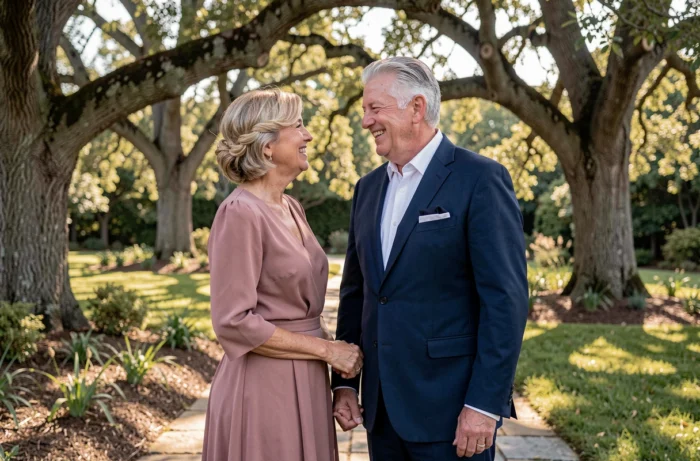
Navy blue and pearl gray remain safe bets. No one disputes their elegance. However, sticking to them systematically ignores a clear trend from recent seasons.
Bright and bold colors also suit women over 60. Tones like cherry red, royal purple, or vibrant orange work very well as long as the cut remains simple. The principle is simple: the more intense the color, the more the cut should stay clean.
The style of Gayle King, photographed as the mother of the groom in vibrant orange and yellow tones with a loose and comfortable dress, illustrates this approach well. The result: a joyful, appropriate look, without anything flashy.
Shades that photograph well in group photos
The photographic result is a concrete criterion to consider: some palettes are designed to look good in group photos. Muted tones (terracotta, sage green, plum) even out the complexion in photos and are less noticeable on small skin imperfections. This is a real concern after 60, much more concrete than the perennial advice to “wear pastels.”
Very light pastels (pale pink, lilac) can work, but be careful: on mature skin, they risk creating a washed-out effect if the fabric is matte. Prefer a slightly satin fabric that captures light.
Dress or pantsuit: choose according to the day, not just the silhouette
The classic question (dress or pants) often arises from the perspective of body shape. This is relevant, but incomplete. The flow of the day matters as much as the body shape.
A wedding with a religious ceremony, a two-hour standing cocktail, and a dance party does not require the same outfit as a civil wedding followed by a seated lunch. Have you noticed that a perfect dress for the town hall can become a nightmare after four hours standing on grass?
Midi dress: the most versatile format
The midi dress (knee-length) remains the most suitable format for most ceremonies. It allows for wearing low-heeled shoes without disrupting proportions and does not hinder climbing stairs or sitting on a low chair.
A midi dress in crepe, slightly fitted at the waist, works from the town hall to dessert. Add a structured jacket for the ceremony, remove it for the evening.
Pantsuit: an alternative that is no longer “demure”
The pantsuit, worn with a well-tailored blazer and a fluid top, offers a sharp and modern silhouette. The pants elongate the leg, while the blazer structures the upper body. It’s a piece you will wear again, unlike most ceremony dresses.
Accessories and shoes for wedding guests: the details that change everything
Accessories are not just decorative extras. They alter the overall perception of the outfit.
- Shoes: a block heel of 3 to 5 cm offers stability and style. Stiletto heels are elegant but unrealistic for an eight-hour day. Wedge espadrilles work for a rustic wedding.
- Jewelry: prefer a single “statement” piece rather than several discreet items. Bold earrings with a choker necklace, for example, create a clear focal point.
- The shawl or jacket: always plan a piece for the shoulders. The temperature drops in the evening, and a coordinated chiffon shawl is better than a last-minute borrowed cardigan.
Personalized dress code: a trend to check before buying
More and more couples are including a detailed dress code in their invitation. This practice, which has developed recently, sometimes includes specific sections for senior guests or individuals with reduced mobility.
Check the dress code before any purchase. A “garden party” wedding does not call for the same outfit as a “black tie” wedding. If the couple mentions a color palette, a coordinated accessory (scarf, clutch) is enough to show that you have read the invitation carefully, without needing to buy a complete outfit.
Ultimately, the choice of a wedding outfit after 60 relies on three filters applied in order: fabric first, cut next, color last. Start with comfort to achieve elegance, not the other way around. A well-draped crepe and a cut tailored for eight hours of ceremony matter more than the exact shade of the dress.