
The real estate market in Pézenas relies on a particular valuation mechanism: the heritage protection of the historic center limits the supply of renovated properties, which maintains pressure on prices even when the rest of the department slows down. Buying or selling a property in Pézenas requires understanding this dynamic before looking at the raw figures per square meter.
New DPE 2026 and its impact on sales in Pézenas
Since January 1, 2026, the conversion coefficient for electricity used in the calculation of the DPE has been lowered. In practice, some electrically heated homes gain an energy class without any work. For Pézenas homeowners who were hesitant to sell due to an E or F rating, this change is a game changer.
A property that moves from F to E exits the category of “thermal sieves” and regains the right to be rented without restriction. For a seller, this also means one less negotiation point for the buyer. Local real estate listings, available for example on https://pezenas-immobilier.fr/, now display recalculated labels that reflect this change.
In Pézenas, where the old buildings in the city center are often heated by convectors or air-to-air heat pumps, this evolution affects a significant portion of the stock. Getting a new DPE before putting the property up for sale can therefore change the pricing position of the property.
Sell now or wait until 2027: the calculation to make
This question arises for all homeowners considering a sale in Pézenas. Prices per square meter have notably increased over the past seven years, but the rise is slowing down. The rate of increase over the last two years is significantly lower than the long-term trend.
What 2027 changes for rental property owners
Starting in 2027, new obligations related to the DPE will come into effect for property owners. Homes classified as G will be prohibited from being rented. A rental property classified as G loses its rental profitability starting in 2027 if no renovations are undertaken. Selling before this deadline avoids having to finance heavy work on old buildings, sometimes constrained by the rules of the protected sector.
The “wait” scenario has a cost
Postponing the sale by one to two years means betting on a continued rise in prices. However, in the Hérault department, the dynamics have already reversed in certain segments. Pézenas is holding up better due to its tourist and heritage appeal, but the local market is not immune to the national context of borrowing rates.
Waiting also means continuing to bear property taxes, condominium fees if applicable, and the risk of energy classification downgrades if regulations tighten further. The annual carrying cost of an unoccupied property can absorb the expected capital gain.
Real estate purchase in Pézenas: three criteria that square meter prices do not show
Price comparators provide an average, but in Pézenas, the differences between two properties of the same size are considerable. Three factors explain these variations and should guide the purchasing decision.
- The risk assessment verified at the exact address: the ERP (risk and pollution assessment) must be established at the parcel level, not at the municipal level. A property located on the edge of a flood zone or near a Seveso classified site will see its resale value constrained. In Pézenas, certain parcels close to the Hérault or Peyne rivers are affected.
- The presence or absence of an outdoor space: in the historic center, townhouses with a courtyard or terrace are negotiated at a much higher range than properties without outdoor space. The gap is often more decisive than the living area itself.
- The classification in a protected sector: work on a property located within the protected perimeter requires the approval of the architect of the Buildings of France. This extends renovation timelines and increases costs. A buyer must factor this constraint into their overall budget.
Buyer profiles and tensions in the Pézenas market
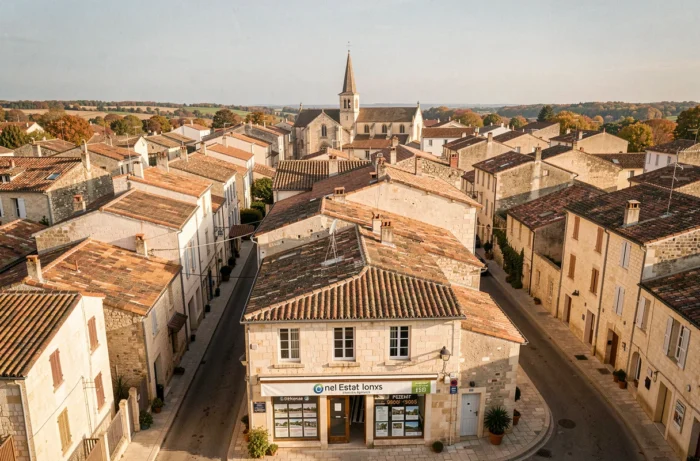
Pézenas attracts different buyer profiles, creating specific tensions for certain types of properties. Families coming from Béziers or Agde are looking for houses with gardens on the outskirts. Retirees and investors in second homes target the historic center, its private hotels, and character properties.
The third profile, less visible, is that of the seasonal rental investor. The proximity to Cap d’Agde and the city’s cultural programming (theater season, markets, festivals) fuel demand for short-term rentals. These three profiles do not compete for the same properties, but they collectively maintain pressure on the entire stock.
For a seller, identifying the target profile of their property allows for adjustments in pricing and marketing strategy. A renovated master house with a courtyard does not sell at the same pace or with the same arguments as a T3 apartment on the outskirts.
Mandatory diagnostics for selling in Pézenas in 2026
The technical diagnostics file (DDT) remains a frequent point of friction in transactions. In 2026, the list includes the recalculated DPE, the asbestos diagnosis for properties built before 1997, the lead exposure risk assessment for those built before 1949 (which concerns a large part of the historic center), and the ERP established at the precise address of the property.
An ERP established on the wrong parcel can be contested by the buyer after the sale. This often overlooked point exposes the seller to a lawsuit. In Pézenas, where the parceling of the old center is dense and sometimes poorly referenced, verifying the exact address with the land registry before ordering the diagnostics avoids this risk.
The real estate market in Pézenas remains supported by solid fundamentals: protected heritage, geographical position between highways and the coast, and an active living area. The sales window opened by the new calculation of the DPE and the regulatory pressure of 2027 creates a situation where delaying is not necessarily the best option for owners of energy-consuming properties.