An Eastpak bag returning from vacation is covered in stains, the bottom sticky after a poorly closed bottle. The updated Eastpak product sheets from 2026 (Day Pak’R, Out Of Office, Springer, Travelpack) explicitly exclude machine washing.
The message is clear: hand wash only in cold water, no tumble drying. This creates a contradiction between what we all do and what the brand truly recommends.
Eastpak Warranty and Machine Washing: What You Risk
The Eastpak warranty covers defects in materials and workmanship, not damage due to misuse, accidents, or negligence. A bag with a peeling interior coating or loose seams after a machine wash falls into the “misuse” category.
A machine wash can void the long-term warranty. If the product sheet states “handwash only” and you put the bag in the drum, the brand considers the damage to be your fault.
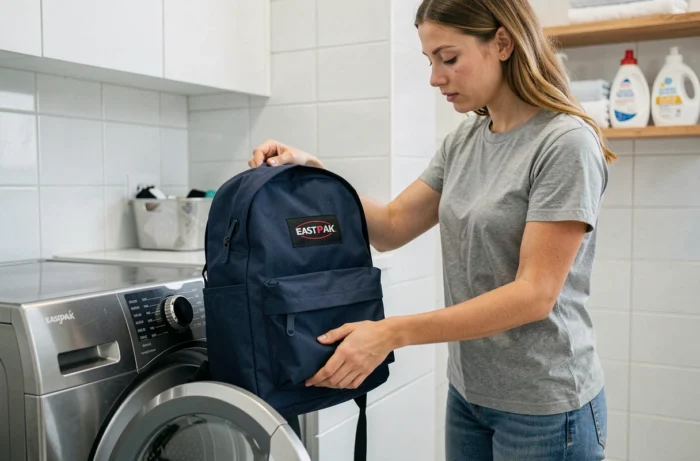
When you want to wash an Eastpak bag in the machine without damaging it, you must first weigh this compromise: immediate convenience against long-term warranty coverage. For a new or recent bag, hand cleaning remains the only option without contractual risk.
Hand Cleaning an Eastpak Fabric Bag: The Method That Preserves Everything
Most Eastpak bags are made of Cordura polyester or nylon. These materials can withstand cold water and neutral soap, but not prolonged mechanical agitation or heat. Here’s the protocol that works without degrading the water-repellent coating.
- Completely empty the bag, turn the pockets inside out, shake out crumbs and debris. Open all zippers to prevent water retention in corners.
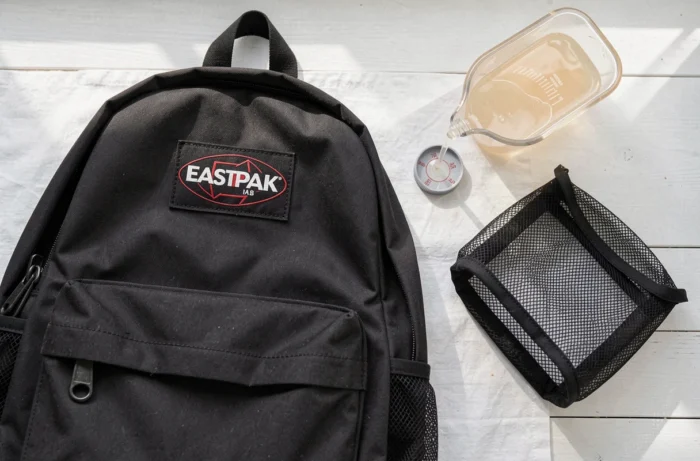
- Fill a basin with cold water, add a dollop of Marseille soap or liquid neutral soap. Submerge the bag, scrubbing dirty areas with a soft-bristled brush (like a nail brush). Pay special attention to the straps and back, which accumulate sweat.
- Rinse thoroughly with clear water until all suds are gone. Any soap residue attracts dirt and stiffens the fabric as it dries.
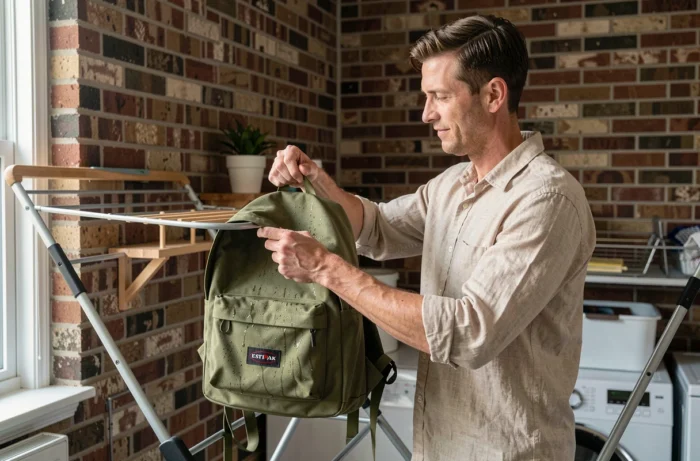
- Gently squeeze without twisting: press the bag flat between two towels, then air dry, in the shade, bag open and turned inside out. Direct sunlight discolors polyester, and tumble dryer heat distorts reinforcements and straps.
For stubborn stains (ink, sauce, ingrained mud), apply a bit of soap directly to the area before soaking. Let it sit for a few minutes, then scrub. Results vary on the effectiveness of baking soda for odors, but a prolonged soak (one hour) in soapy water generally yields better results than a dry sprinkle.
Machine Wash Anyway: Reducing Damage to an Eastpak Polyester Bag
A very dirty bag, soaked with stubborn odors after weeks of carrying food, may justify a machine wash. We won’t pretend that no one does it. The goal is to limit mechanical and thermal damage.
Delicate cycle on cold, minimal spin: that’s the foundation. No cotton cycle, no 40 °C. Heat weakens the heat-sealed seams that reinforce the bottom and side seams of most Eastpak models.
Before putting the bag in the drum:
- Remove any removable frame or structure (some travel models have them). Empty and brush the inside.
- Close all zippers to prevent them from catching on the drum or becoming deformed.
- Place the bag in a closed pillowcase or a laundry net. This cover absorbs some of the shocks and protects the buckles and straps.
- Use a reduced amount of liquid detergent (no powder, which leaves residues in the seams). No fabric softener: it clogs the fabric fibers and degrades the water-repellent treatment.
One cycle is enough. Do not run a second rinse “to be sure,” as the extra agitation wears out the fabric without real benefit. Remove the bag immediately after the program ends.
Drying After Machine: The Critical Point
The tumble dryer is the real danger, more so than the washing itself. Heat shrinks nylon, distorts rigid polyester, and can melt heat-sealed elements. Always air dry, bag open and hung upside down.
You can speed up drying by placing a rolled towel inside the bag to absorb residual moisture, then hanging it in a ventilated area. Allow at least a full day before reusing it.
Special Cases: Eastpak Bags in Leather and Waterproof Models
Eastpak bags with leather inserts (panels, bottom, handle) should never go in the machine. Leather shrinks, hardens, and cracks with prolonged contact with water. Clean these parts with a damp cloth, without soap, then apply a nourishing leather balm.
Models with water-resistant coatings (like tarpaulin or coated fabric) can be cleaned with a damp cloth and a bit of neutral soap. Prolonged soaking degrades the waterproof coating, even in cold water. Targeted wiping is sufficient in most cases.
For zippers that get stuck after cleaning, running a candle or graphite pencil along the teeth restores the slider’s fluidity. Avoid spray lubricants that stain adjacent fabric.
An Eastpak at the end of its life, stained everywhere, can withstand a delicate cold cycle without major consequences. A recent model that you plan to keep for years deserves the few minutes of manual cleaning that preserves both the fabric and the manufacturer’s coverage.