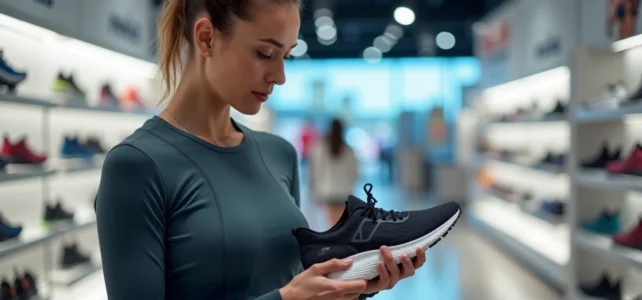
The choice of sports equipment is based on biomechanical and material parameters that most general public guides overlook. A poor match between the equipment and the mechanical stress profile of the user generates postural compensations, accelerates fatigue, and limits progress. Here, we detail the technical criteria that make the difference between adequate equipment and equipment that is truly suited for performance.
Stiffness, drop, and energy return: decoding running shoes
The shoe concentrates most of the force transfer to the ground. Three parameters condition its effectiveness: the stiffness of the carbon or composite plate, the drop (heel-to-toe differential), and the energy return rate of the midsole foam.
A high drop favors heel striking and is suitable for heavier runners or long outings at a low cadence. A low drop places more stress on the Achilles tendon and calf, which requires a gradual transition to avoid tendinopathies. We recommend not changing the drop by more than four millimeters between two pairs used in rotation.
The energy return depends on the density and geometry of the foam. Supercritical foams (PEBA) return significantly more energy than standard EVA, but their durability is lower. For a runner accumulating a high weekly volume, alternating a pair with high energy return for quality sessions and a more cushioned pair for endurance remains the most cost-effective strategy over a training cycle.
Before selecting a model, it is useful to be able to access the equipment from Va Y Avoir Du Sport to compare technical characteristics by practice category.
Connected sensors and textiles: adjusting equipment to training load
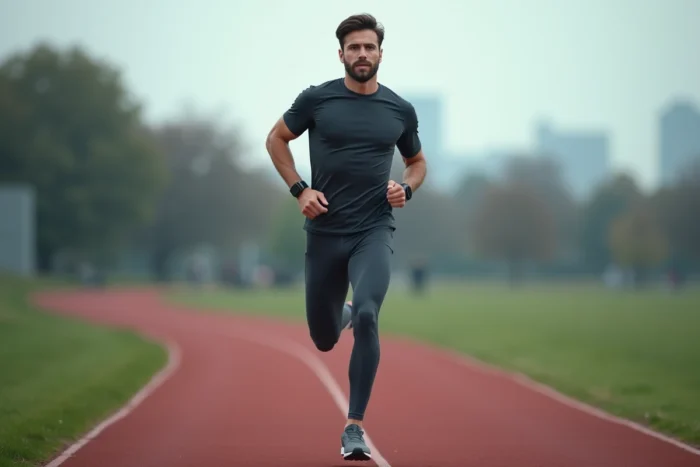
Textiles with integrated sensors change the logic of equipment choice. Until recently, users selected their gear based on static criteria (morphology, discipline, budget). Connected clothing that continuously measures heart rate, body temperature, and sometimes muscle activation now allows for adapting equipment based on actual fatigue levels.
In running, this data is used to calibrate the stiffness of shoes or the choice of insoles according to cumulative load. An athlete whose sensors indicate marked muscle fatigue at the end of a cycle may switch to a shoe with enhanced cushioning rather than maintaining their competition pair. This approach reduces the risk of overload injury without needing to cut volume.
The 2025-2026 trend points towards a wider public distribution of these systems, with decreasing prices and increased compatibility with common training applications. We observe that amateur practitioners who integrate this data into their equipment rotation progress more consistently because they avoid periods of overuse of equipment that is unsuitable for their current physiological state.
Comfort and performance of clothing: beyond textile marketing
The comfort of sports clothing is not a subjective question. It is measured by the ability to wick moisture, resistance to abrasion at friction points, and the maintenance of thermoregulation under prolonged effort.
- Synthetic fibers with quick-drying properties (polyester, polyamide) outperform cotton on all performance criteria, but their weight must be adapted to intensity: a fabric that is too light does not withstand the repeated friction of a backpack or harness.
- Compression garments improve venous return and reduce muscle oscillations, which has measurable benefits during long-duration efforts or active recovery phases.
- Flat or bonded seams in contact areas (armpits, crotch, collar) eliminate irritations that, during several hours of effort, become a real limiting factor for performance.
The choice of a fitted cut also reduces aerodynamic drag. In road cycling, a well-cut jersey represents a significant power gain at high speeds, without any change in physical condition.
Strength training equipment: bars, free weights, and load quality
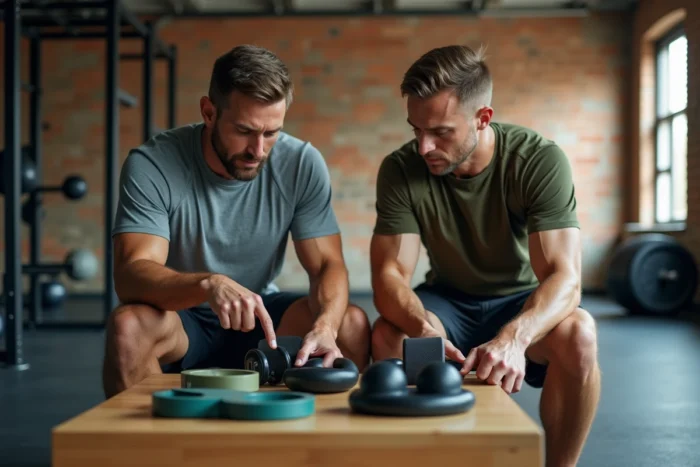
The strength training equipment segment is experiencing marked growth, driven by home and gym practice. The choice of equipment directly influences the quality of movement and joint safety.
The weight tolerance of an Olympic bar determines the reliability of progression. An entry-level bar may have significant mass discrepancies between the announced discs and their actual weight, which skews load tracking. We recommend checking the tolerance indicated by the manufacturer and weighing the discs upon receipt.
The knurling of the bar determines the quality of grip under heavy load. Too aggressive knurling damages the palms, while too smooth knurling compromises safety during deadlifts or cleans. The center of the bar should remain smooth for front squats and cleans.
- Needle bearings in the sleeves allow for smooth rotation, essential for weightlifting movements.
- The diameter of the bar (standard or Olympic) determines compatibility with existing racks and discs.
- Anti-corrosion coatings (zinc, cerakote, chrome) affect durability and feel, without direct impact on mechanical performance.
Team sports balls and accessories: standards and reality on the field
In football, the laws of the game frame the characteristics of the ball (circumference, pressure, weight). A ball that complies with official standards behaves predictably when struck and controlled. Low-cost training balls often deviate from these specifications, which alters the player’s proprioception and skews technical work.
For archery or precision sports, the quality of accessories (sights, stabilizers, arrows) weighs more heavily than in team sports. A poorly calibrated accessory introduces a variable that even a perfect gesture cannot compensate for.
The last criterion, often overlooked, concerns maintenance. Well-maintained performance equipment loses its properties within a few months: unverified ball pressure, shoe soles worn beyond the cushioning threshold, textiles washed at excessive temperatures. Integrating a maintenance protocol into your sports routine extends the lifespan of the equipment and maintains its technical characteristics at the expected level.