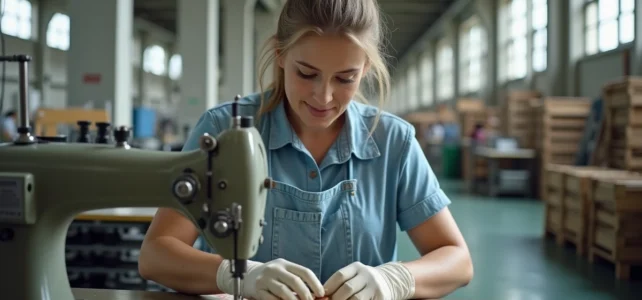
Scholl is a brand founded in 1906 by William Mathias Scholl, an American doctor based in Chicago, specializing in foot health. The question of where Scholl shoes are made does not have a single answer: production is spread across several countries, depending on the range, model type, and materials used.
This multi-site organization reflects a precise industrial logic, where design remains centralized in Italy while assembly takes place across several continents. Understanding this distribution allows for better reading of labels and knowing what one is actually purchasing.
Italian design and multi-country assembly: the real workings of Scholl
A point rarely detailed by retailers concerns the clear separation between design and manufacturing. Scholl sandals, boots, slippers, and clogs are designed in Italy, more specifically from Milan, which houses the headquarters of Scholl Shoes. This is where design, research on soles, and the development of comfort technologies are managed.
Assembly, on the other hand, takes place elsewhere. Part of the production is carried out in Portugal and Italy, two countries with a strong tradition of artisanal footwear. To delve deeper into the manufacturing of the Scholl brand, one must also look towards Spain, a production site often overlooked. The Boa Vista model, for example, is explicitly presented as made in Spain on certain French product sheets.
Higher volume models or those with technical components are assembled in Asia, primarily in China and Vietnam. This distribution is not random: it follows the nature of the product.
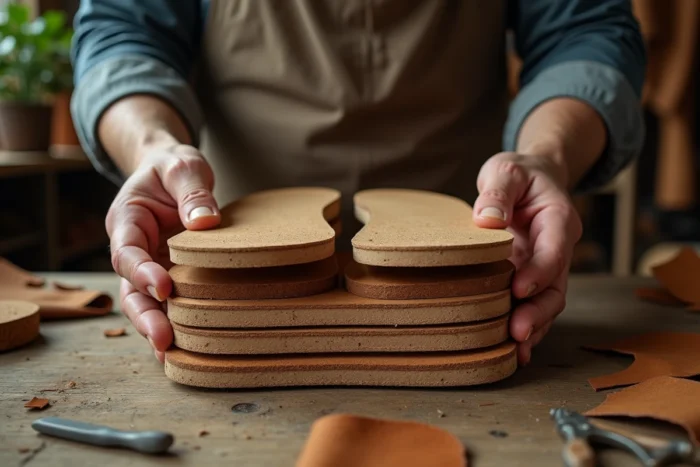
Countries of manufacture for Scholl shoes by range
The location of production varies depending on the positioning of the model. Three main logics coexist.
European production: leather, craftsmanship, and premium ranges
High-end leather models, wooden-soled clogs, and sandals from the Iconic line are mostly made in Europe. Portugal and Italy concentrate leather and stitching know-how, while Spain contributes to certain specific models.
These European workshops work with materials that require more extensive manual processing. The production cost is higher, which is reflected in the selling price.
Asian production: volumes and technicality of soles
High-distribution ranges, particularly models made from synthetic materials or those incorporating molded technical soles, are assembled in China or Vietnam. These factories allow for production rates suited to the brand’s international distribution.
Quality controls remain supervised according to European standards, which means that specifications (foam density, adhesive strength, sole ergonomics) are defined from Milan, regardless of the assembly location.
What the label doesn’t always say
The “Made in” indication on the label refers to the final assembly country, not necessarily the origin of all components. A shoe assembled in Portugal may incorporate a molded sole from Asia. This distinction is common in the footwear industry and is not exclusive to Scholl.
Legal structure and ownership of the Scholl brand
The Scholl brand is currently owned by the British group Reckitt Benckiser for the foot care branch (insoles, creams, accessories). The shoe branch operates under the structure Scholl Shoes, based in Milan.
This separation explains why the Scholl orthopedic insoles sold in pharmacies and the Scholl sandals sold in fashion stores do not follow the same production circuits or distribution channels. The name is the same, but the industrial entities are distinct.
For the consumer, this means that two products bearing the Scholl logo can have very different manufacturing origins, materials, and price levels.
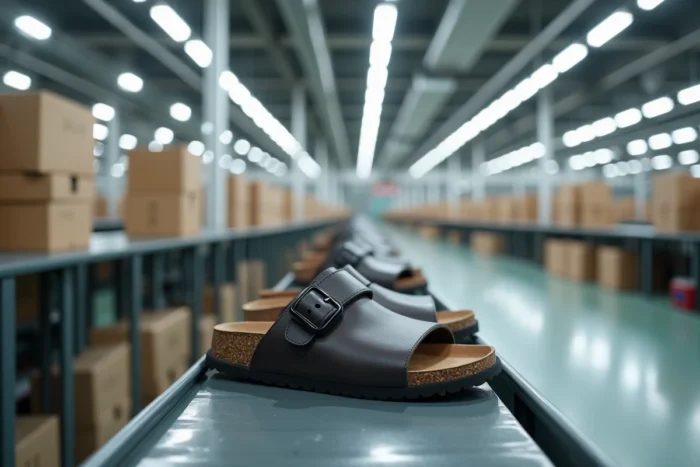
Scholl comfort technologies and their link to production sites
Scholl has developed several proprietary technologies that directly influence the choice of manufacturing site. The main ones are:
- Bioprint: anatomical sole molded based on plantar pressure data. The production of these soles requires specific molding equipment, often located in Asian factories capable of large-scale production.
- Gel Activ: gel insert integrated into the insole, designed to absorb shocks. These inserts are manufactured separately and then integrated during assembly.
- Cushion Back: padded lining at the heel, present on closed models. This process is compatible with both European and Asian workshops.
The choice of production site thus also depends on the embedded technology. A model combining Italian leather and a Bioprint sole may involve two distinct manufacturing sites before final assembly.
Reading a Scholl shoe label: concrete references
Some reflexes can help determine the origin of a model before purchase:
- Check the “Made in” mention on the tongue or insole. It indicates the final assembly country.
- Consult the product sheet online on the official Scholl website or with authorized retailers, which sometimes specify the country of manufacture.
- Identify the range: the Iconic lines and full-grain leather models are more often of European origin, while entry-level models in synthetic materials generally come from Asia.
The price alone is not enough to determine the origin, as a technical model made in Asia may cost more than a simple model assembled in Portugal. It is the combination of material, technology, and production volume that determines the manufacturing location.
The production geography of Scholl shoes remains a fluid subject. The distributions between European and Asian sites evolve with each collection, and Spain is gaining visibility as a third European hub alongside Portugal and Italy. For each pair, it is the label that decides.