
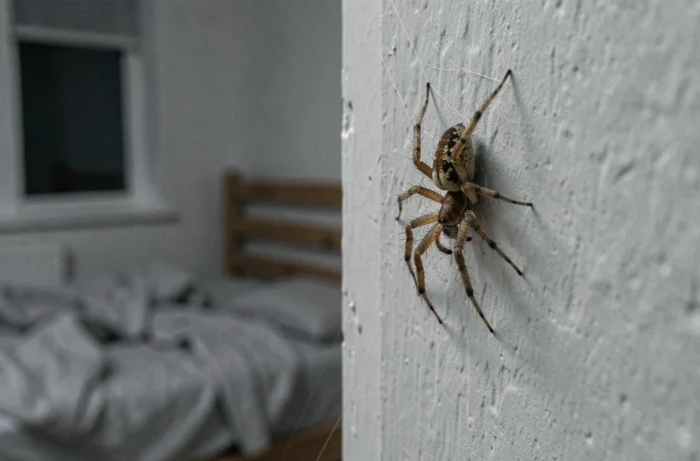
The light is turned on to grab a glass of water, and a spider sits on the wall, just above the headboard. The first instinct, often, is to jump or to look for a shoe. This instinctive reaction solves nothing and complicates things further: the spider scurries away to hide, we lose sight of it, and stress levels rise for the rest of the night.
Turn on the light and observe before making any sudden moves
The worst mistake is to shake the sheets in the dark. You can’t see anything, the spider can’t either, and it will retreat to an inaccessible corner. Opinions vary on this point, but most recent recommendations converge: turning on the light and calmly locating the spider remains the most effective action before any intervention.
Once spotted, take a few seconds to assess the situation. In mainland France, the vast majority of domestic spiders (house spiders, cellar spiders, jumping spiders) are harmless. None of the common species found in our bedrooms pose any serious medical risk.
The reaction to the presence of a spider in the bedroom at night depends on what you observe: a solitary, motionless spider on a wall is just a passing visitor. Spotting several individuals over multiple nights signals a different situation that requires addressing the causes.
Glass and cardboard method: capture without crushing
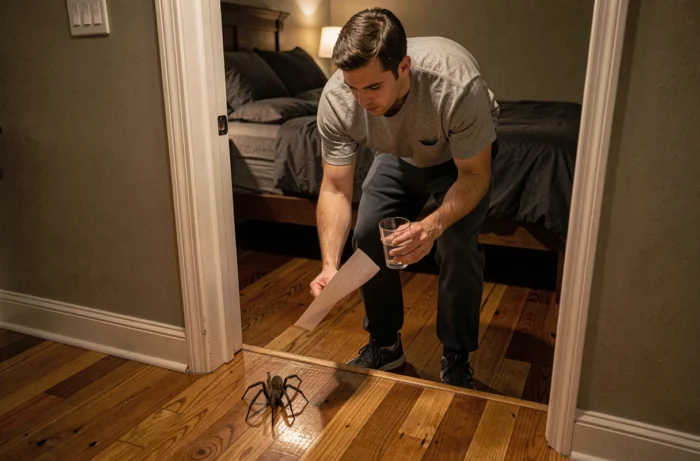
Crushing a spider releases a scent that can attract other necrophagous insects. It’s counterproductive. The simplest technique is to place a glass upside down over the spider, then slide a piece of paper or cardboard underneath to move it.
How to proceed concretely
- Gently approach a clear glass over the spider, flat against the wall or floor, without any sudden movements.
- Slide a stiff sheet (postcard, thin cardboard) between the glass and the surface, maintaining constant pressure to avoid leaving any gaps.
- Release the spider in a little-frequented room (garage, basement, laundry room) or outside near a sheltered wall. Releasing it in the middle of the garden in cold weather significantly reduces its chances of survival.
If you really can’t stand the idea of getting close, a low-power vacuum cleaner with a narrow nozzle can suck it up alive. You can then empty the bag outside.
Seal entry points in the bedroom
Getting rid of the spider addresses the symptom. Sealing cracks and faulty joints prevents reappearances much more effectively than any repellent. Spiders do not appear by magic: they enter through physical openings.
Priority areas to inspect
Worn window seals are the most common entry point. Over time, silicone shrinks and leaves gaps of a few millimeters, more than enough for a house spider. Run a finger along the frame: if you feel a draft, a spider can get through.
Door bottoms without brush seals, unsealed electrical cable conduits, and ventilation openings without fine grilles are other classic entryways. A tube of silicone sealant and an adhesive door sweep can resolve most cases for just a few euros.
Loose baseboards or false ceilings with poorly closed access panels also provide discreet entry points. A quick visual check with a flashlight in the evening, when natural light doesn’t mask the gaps, can help identify these weak spots.
Reduce what attracts spiders to a bedroom
A spider enters a room because it finds food there. Fewer insects in the bedroom means fewer spiders. The link is direct and mechanical.
Mosquitoes, gnats, and small beetles attracted by the light from screens or bedside lamps are the main food source. Turning off unnecessary light sources with the window open, or installing a frame mosquito net, significantly reduces the influx of prey.
Targeted cleaning rather than a major clean-up
Vacuuming behind the headboard, under the mattress, and in the corners of the ceiling once a week is enough to destroy emerging webs and cocoons. Spiders settle where they are not disturbed. Regularly vacuuming dark corners breaks the installation cycle.
Natural repellents (peppermint essential oil, chestnuts, white vinegar) are often mentioned. Their effectiveness in the field is limited over time: the scent dissipates within a few days, and reapplication is necessary. It’s a supplement, not a standalone solution.
Spider bite at night: distinguishing the real from the fake
Waking up with a red mark on the skin does not necessarily mean a spider bite. Mosquito bites, bedbug bites, or mite bites produce very similar lesions. A spider only bites if it is pressed against the skin, which is rare when moving during sleep.
If the area shows significant swelling, redness extending beyond a few centimeters, fever, or increasing pain, consulting a doctor can rule out an infectious risk. In the vast majority of cases, simple local disinfection and monitoring over 48 hours are sufficient.
Photographing the lesion upon waking and then 24 hours later helps the doctor make a diagnosis if the situation worsens. It’s a simple reflex that avoids describing from memory a mark that has already changed in appearance.
The regular presence of spiders in a bedroom primarily reflects a favorable environment: open access, available prey insects, quiet corners. Correcting these three parameters makes cohabitation rare and nights significantly calmer.