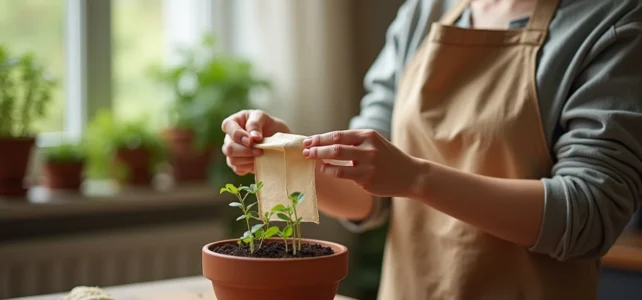
Not all used tea bags are equal once the cup is empty. Their composition (paper, nylon, corn starch, heat-sealed glue) determines what can actually be done with them, from composting to surface care, or simply throwing them in the regular trash. Before recycling or reusing, the first question to settle is about the nature of the bag itself.
Composition of tea bags: what changes everything for recycling
The majority of articles on used tea bags assume that the bag is compostable. This assumption is false in a significant number of cases.
| Type of bag | Main material | Compostable | Reusable (home tips) |
|---|---|---|---|
| Unbleached paper, without staple | Cellulose | Yes (home compost or organic waste collection) | Yes |
| Bleached heat-sealed paper | Cellulose + synthetic glue | Partially (remove the staple, check the glue) | Yes, with caution |
| Nylon / PET (pyramidal bag) | Plastic | No | Limited (do not compost, nor contact with skin) |
| Corn starch (PLA) | Bioplastic | Industrial composting only | Yes |
Nylon or PET bags, often recognizable by their pyramidal shape and silky texture, do not decompose in home compost. Throwing them in the organic waste bin contaminates the system.
Corn starch bags, marketed as “compostable,” pose another problem. According to data from RVH-Synergie and sorting guides from several French municipalities, these bioplastics require industrial composting at high temperatures to degrade. A garden composter is not sufficient. To check if your bag is accepted, you should consult the resources from Jardiniers info or the sorting guidelines from your municipality, which vary significantly from one city to another.
Used tea bags in the garden: natural fertilizer or a false good idea
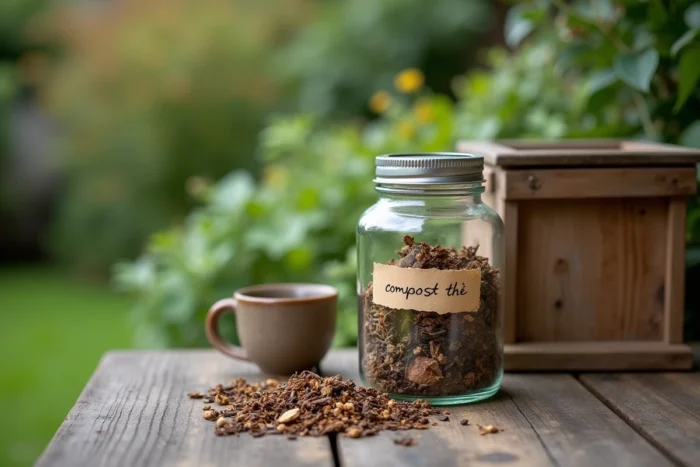
Using tea bags as a soil amendment is the most common tip. Used tea grounds provide nitrogen, potassium, and tannins to the substrate, which benefits acid-loving plants (hydrangeas, roses, tomatoes).
However, there is a prerequisite: only the contents of unbleached paper bags truly enrich the soil. With a nylon bag, you must open it, retrieve the leaves, and throw the envelope in the regular trash.
Concrete uses in the garden
- Mix used tea grounds directly into the potting soil or at the base of plants to improve water retention and nourish soil microorganisms
- Place an unbleached paper bag at the bottom of a planting hole to slow down root drying during the first weeks
- Add cellulose bags to the home composter, removing staples and labels, to accelerate decomposition thanks to the tannins
On the other hand, heavily flavored bags (red fruits, synthetic vanilla) often contain additives that have no place in food compost. Organic waste management guides in Quebec (RECYC-QUÉBEC) recommend excluding these bags from the brown bin.
Reusing tea bags for home maintenance
The tannins in black tea have measurable cleaning properties. Their action on grease and glass surfaces relies on a simple mechanism: tannins are astringent polyphenols that dissolve greasy residues without leaving a film.
Glass surfaces and mirrors
Wiping a damp black tea bag on a mirror or window, then drying with a clean cloth, leaves a streak-free surface. Black tea works better than green tea for windows, as its tannin concentration is higher.
Varnished wood and parquet
Steeping two used black tea bags in a liter of warm water for about ten minutes produces a lightly tinted liquid. Applied with a soft cloth to varnished wood, it revives the color and nourishes the surface without aggression. This method is not suitable for raw or waxed wood, where the tannin may leave stains.
Neutralizing odors
A dried tea bag absorbs odors in a refrigerator, a shoe closet, or a travel bag. The tea leaves capture the volatile molecules responsible for bad smells. For effective results, replace the bag every two weeks.

Tea bags and facial care: what really works
Applying cooled tea bags to the eyes to reduce dark circles and puffiness is a widely repeated tip. It is the tannins and caffeine in black tea that cause local vasoconstriction, temporarily reducing swelling. Green tea, rich in catechins, has a more soothing effect on redness.
Some precautions to keep in mind:
- Use unbleached paper bags to avoid any contact with glue or plastic on the skin around the eyes
- Let the bag cool in the refrigerator for at least an hour before application, as the cold amplifies the decongesting effect
- Avoid flavored teas containing added essential oils, which can cause irritation on sensitive skin
The result remains temporary, lasting a few hours. No tea bag replaces a dermatological treatment for chronic dark circles, but the temporary decongesting effect is real and documented.
Sorting guidelines for tea bags: why they change according to municipalities
Since the gradual rollout of separate organic waste collection in France, local guidelines have become more complex. A bag accepted in the brown bin in Lyon may be refused in Pornic or Greater Paris.
The reason lies in processing capabilities. Industrial composting facilities can degrade PLA bioplastics. Local composting platforms, more numerous in rural areas, do not reach sufficient temperatures. The default guideline remains to check with your municipality before throwing a bag into the organic waste bin.
In case of doubt, open the bag, empty the tea grounds into the compost or organic waste bin, and throw the empty envelope in the regular trash. This method eliminates the risk of contamination regardless of the bag’s composition.